
What is usenet?
Usenet is one of the oldest online discussion and file-sharing systems on the internet — created in 1980, long before the modern web, social media, torrents, or cloud storage. It started as a distributed messaging system where people posted to discussion boards called newsgroups. Over time, it evolved into a major platform for binary files (videos, software, music, images) as well as text discussions.
Today, Usenet still exists, is very active, and is widely used — though it’s far less mainstream than the web.
How Usenet Works (Simple Explanation)
Think of Usenet like a massive global bulletin board.
Instead of websites, Usenet uses:
- Newsgroups → categories (like forums/subreddits)
- Posts → messages or file uploads
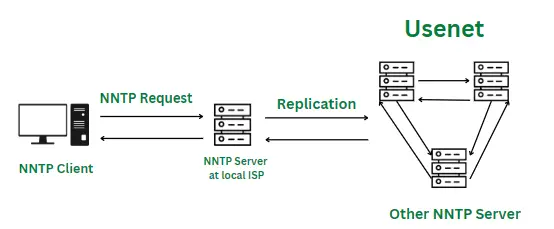
- Servers → companies store & distribute content
- Retention → how long content stays available (often 5–15+ years now)
Unlike the web, Usenet is not centralized. Content is distributed across many servers worldwide.
Key Usenet Concepts
📌 Newsgroups
Each topic has its own group:
- text groups (discussion, tech, hobbies)
- binary groups (movies, music, software, etc.)
Examples:
alt.binaries.movies
comp.lang.python
alt.binaries.music
alt.discussion
📌 Binary Usenet (Modern Main Attraction)
Most modern users come for binary downloads.
You don’t browse; instead you:
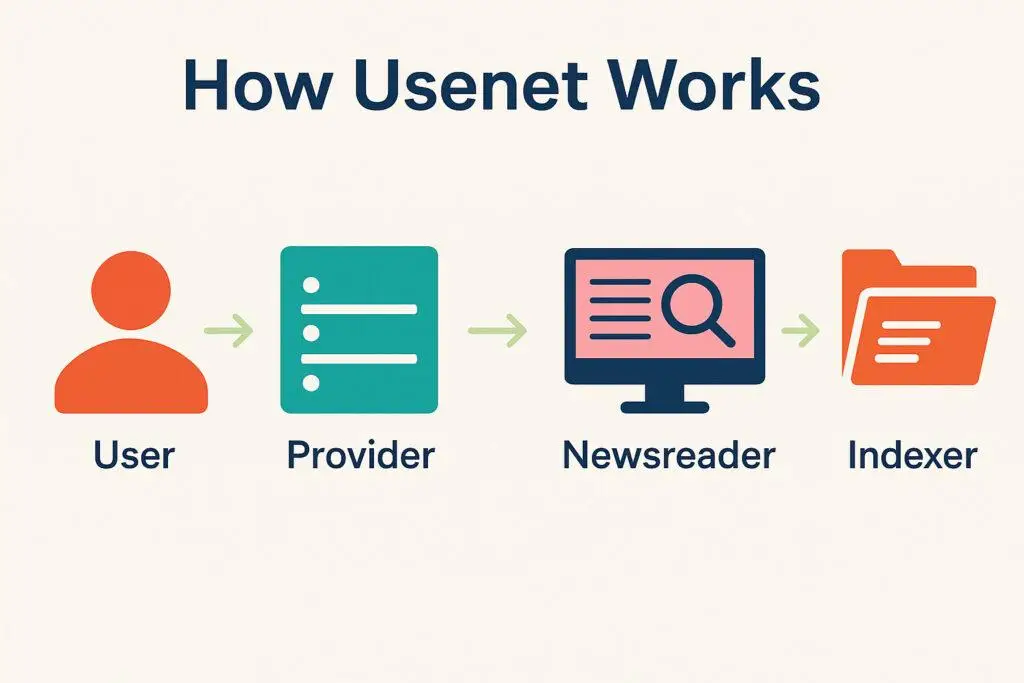
- Subscribe to a Usenet provider
- Use a newsreader app
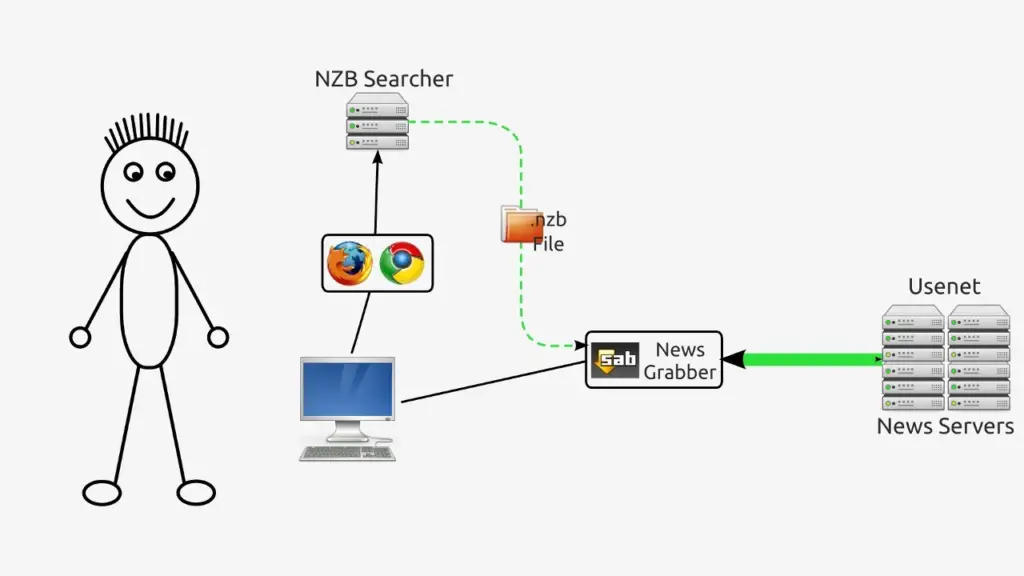
- Search through an indexer (like a search engine)
- Download fast, often at full ISP speed
Binary downloads use NZB files, similar to torrent magnet links — but without peer-to-peer sharing.
📌 NZB Files
An NZB points to file fragments across Usenet. Your newsreader assembles them back into the full file. This makes downloading:
- fast
- private
- easy to automate
How Is Usenet Different from Torrents?
| Feature | Usenet | Torrents |
|---|---|---|
| Speed | Usually maxes your internet speed | Depends on seeders |
| Privacy | Much more private | Public IP exposure |
| Requires Upload? | ❌ No | ✔️ Yes |
| Longevity | Years of retention | Depends on seeders |
| Setup Difficulty | Medium | Easy |
Usenet isn’t P2P — you download from servers, not strangers.
Is Usenet Legal?
Yes — Usenet itself is legal.
It’s a communication network.
However, like torrents, downloading copyrighted content can be illegal depending on your country. Many providers apply DMCA takedowns; others don’t.
Use responsibly.
How to Access Usenet (Beginner Setup)
Step 1 — Choose a Usenet Provider (Paid)
Usenet isn’t free (usually). Providers maintain servers and retention. Popular ones generally include:
- Newshosting
- Eweka
- UsenetServer
- Astraweb
- Giganews
Look for:
✔ long retention (3000–6000+ days)
✔ unlimited downloads
✔ SSL encryption
✔ good completion rate
Cost: $8–$15/month on average.
Step 2 — Get a Usenet Client (Newsreader)
For text discussion:
- Thunderbird
- Pan
- Gnus
For binary downloads:
- NZBGet
- SABnzbd
- Newsbin
Step 3 — Get an NZB Indexer
Think Google for Usenet.
Public indexers exist, but serious users use private paid indexers for reliability/search quality.
What Do People Use Usenet For Today?
✔ Downloading binary files (movies, TV, software, music)
✔ Research archives
✔ Tech & programming discussions
✔ Niche communities
✔ Accessing content not easily found elsewhere
✔ Automation with tools like Sonarr/Radarr (advanced users)
PROS AND CONS of Usenet

Pros
- Usenet has survived 40+ years.
- Still active in certain tech/science niches.
- Content often stays available for 10+ years.
- No peer IP exposure. Encrypted SSL connections.
- Blazing Fast Downloads

Cons
- Searching directly inside Usenet is inconvenient.
- Copyright laws still apply.
- Some content disappears on U.S.-based providers.
- More complicated than torrents or streaming.
- Monthly subscription + sometimes indexer fees.
Is Usenet Safe?
Usenet itself is safe. Risks depend on:
- downloading unknown files
- malware
- copyrighted material
- shady indexers
Use antivirus & trusted sources.
Usenet in 2025 — Is It Still Worth Using?
YES — if you want
✔ maximum download speed
✔ privacy while downloading
✔ rare/long-term archived files
✔ stable automation
✔ an alternative to torrents
NO — if you
❌ want something totally free
❌ don’t want to configure software
❌ are satisfied with streaming/torrents
❌ need only casual downloading
⭐ Verdict: Usenet Review
Usenet is powerful, fast, private, and underrated.
It’s not mainstream because it requires setup and isn’t free, but for serious downloaders, archivists, and tech enthusiasts, it remains one of the best systems on the internet.
Overall Rating:
🟢 Speed: ⭐⭐⭐⭐⭐
🟢 Privacy: ⭐⭐⭐⭐☆
🟢 Reliability: ⭐⭐⭐⭐⭐
🟡 Ease of Use: ⭐⭐☆☆☆
🟡 Cost: 💲💲💲
FAQs
Usually no. Some free servers exist but unreliable. Paid = best experience.
Much harder than torrents, but nothing online is 100% invisible.
Yes, especially tech, science, old school internet users.
Not really — but once set up, it’s easy.
READ ALSO: What is iMyFone?

Hi, this is Masab, the owner and founder of the PC Wire. I’m a PC enthusiast who loves to talk about computers. I have been testing PC hardware for several years now, and I hope my knowledge would answer your queries thoroughly.